
Sussex Archaeology and History Ltd
Lectures, Conferences, Courses and Study Tours in Sussex and beyond
Sussex Archaeology Symposium
This took place on: Saturday 21st March 2026
Speaker details and abstracts are shown below

Priory Park (Chichester) Archaeology Project, 2016-2025
James Kenny
A publicly accessible community archaeological investigation of Roman and medieval remains in Priory Park, Chichester. Undertaken as a collaboration between Chichester District Council and Chichester and District Archaeology Society, directed by CDC's Archaeology Officer, James Kenny. Highlights included the excavation of a well preserved Roman private bath suite and a likely barbican tower associated with Chichester's Norman castle.


James Kenny, BA
James was educated in Chichester and at Newcastle University. He has worked professionally in archaeology since 1983, initially for University College London and West Sussex County Council and then for Chichester District Council’s Archaeology Unit and its successor Southern Archaeology (Chichester) Ltd. Since 1998 he has been employed as Chichester District Council’s Archaeology Officer, providing advice on matters relating to development management, managing and maintaining the District Historic Environment Record and leading community archaeological investigations.

Dr Jon Baczkowski
Chris Butler Archaeological Services
Jon began working in developer funded archaeology in 2010 and has worked at Chris Butler Archaeological Services Ltd (CBAS Ltd) since 2017, where he is currently a Project Manager and prehistoric lithic and Neolithic pottery specialist. During his time at CBAS Ltd he has directed many small to large-scale fieldwork projects, including a significance Bronze Age settlement at Ringmer, East Sussex. Jon is currently managing the large-scale excavation of an important multiperiod landscape close to Pevensey, East Sussex
Whilst working in the commercial sector Jon has also developed an academic career. In 2011 he completed an MA in 2011 at the University of Reading, which were published in the Oxford Journal of Archaeology (2014), a paper proposing that the British flint mines were Continental in origin. In 2021 he completed a PhD at the University of Southampton, titled The Early Neolithic flint mines of Sussex and their wider environs, which combined archival research and new field survey on the Sussex flint mines. Jon has recently completed a post doctorate position at the Institute of Archaeology, Nicolaus Copernicus University in Toruń, Poland, researching the dating and spread of flint mining across Central Europe.
Jon is an active member of the Commission on Flint Mining in Pre- and Protohistoric Times, a working group of the Congress of International Union of the Prehistoric and Protohistoric Sciences. He is also a member of the editorial board of the Sussex Archaeological Collections. Jon continues to teach archaeological fieldwork methods, including seasonally for the University of Southampton. Lastly, Jon continues to publish papers, in British and European journals, and drive research on both flint mining and the Early Neolithic of southern England, including the development of a project on a Polish flint mine and settlement.
Rattle Road, Westham, the investigation of a significant coastal landscape
Jon Baczkowski
Between July 2021 and November 2024 CBAS undertook excavations in advance of the construction of a housing development on land north and south of Rattle Rd, Westham. Approximately 12 hectares of landscape was investigated across three areas and twelve trenches were excavated. The findings of the project were significant and document the last 12,0000 years of human activity upon the site. Most notable was evidence of Neolithic use, including an oval barrow, a possible structure, and numerous pits. Also recorded was evidence of Roman activity, including 500m of the Barcombe to Pevensey Roman Road and a previously unknown spur road. Five well preserved Roman salterns were also recorded located close to the edge of the Mountney Levels, a former tidal estuary. Lastly, evidence of a Saxon to early Norman settlement was recorded. This lecture will present the key fieldwork results and initial post-excavation findings, along with the results of the geoarchaeological investigations which have revealed an important and long used landscape.


Battling the on-line experts - recent archaeological work on Bronze Age and Roman enclosure sites in the Hailsham area
Simon Stevens
The scale of recent residential development in the Hailsham area has offered archaeologists numerous sites to investigate, and despite assurances from ‘on-line experts’ that nothing would be found, discoveries have revolutionised our understanding of the distant (and not-so-distant) past of this corner of East Sussex.
We will concentrate on two sites excavated in advance of house building - one to the south of Hailsham at Station Road, and one to the east of the town at Marshfoot Lane. Enclosures containing buildings were encountered and recorded at both sites, suggesting utilisation of the local landscape from at least the Middle Bronze Age onwards at Station Road, with strong evidence for Roman and medieval agriculture on high ground overlooking the Pevensey Levels at Marshfoot Lane.


Simon Stevens, BA
Simon Stevens is a Senior Archaeologist/Project Officer at Archaeology South-East and is the Vice Chair of the Wealden Iron Research Group. Sussex born-and-bred, he has been digging holes and looking into them in the county and beyond for over 30 years.


Alex Bliss, BA
Alex Bliss is a numismatist and metal small finds specialist from Mid Sussex. Having first cut his 'archaeological teeth' at the age of 15, excavating at Barcombe Roman bathhouse under David Rudling, he graduated from UCL's Institute of Archaeology in 2015. Working first for the Portable Antiquities Scheme as Finds Liaison Officer for Suffolk, he subsequently took up a (land-based) role on the Rooswijk1740 shipwreck project in 2020, and now works for a commercial archaeological unit in East Anglia. His interests, aside from community archaeology and publishing metal finds of all periods, include real ale and Ipswich Town Football Club.
‘Come along like buses': two recent Bronze Age metalwork deposits from Ashurst and Elsted, West Sussex
Alex Bliss
Our understanding of prehistoric metalwork deposition, while standing on a solid foundation of antiquarian and archaeologically-excavated finds, has been much developed in recent years by metal-detected material. While the recording of unstratified single objects and larger assemblages from across landscapes has played an important role in this regard, equally relevant are instances where formal deposits ('hoards') have been discovered. Here, co-operative working, basic archaeological training and promotion of responsible practices have paid dividends, with increasing numbers of metal-detectorists aware of how best to proceed when significant in-situ archaeology is encountered. As such, this paper details the discovery, excavation and analysis of two recent Bronze Age metalwork deposits from West Sussex, both of which were found by metal-detectorists.

Culver Archaeology Project (CAP) Comes of Age
David Millum
2025 saw the Culver Archaeology Project (CAP) celebrate 21 years of investigations into the Roman heritage of Barcombe and Ringmer by becoming a registered charity (no. 1212865). The project has carried out research for every year since its founding in 2005 by Director Rob Wallace and undertaken excavations every year except 2020 when covid restrictions made volunteer and student participation impractical.
In his presentation, David Millum will attempt to pick just some of the most notable and interesting features and finds from the past 21 years as well as highlighting some of the post-excavation work currently being undertaken by the CAP team. This inevitably will be a very limited window into the results and work of this long-running project.
More information is available on the website www.culverproject.co.uk and at the display stand at the conference.

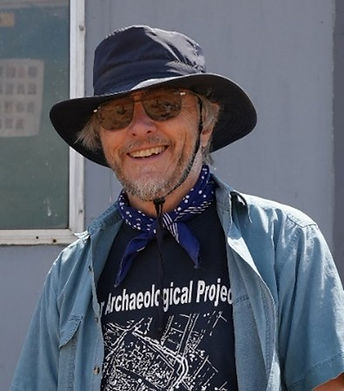
David Millum, MA
David Millum is an independent research archaeologist with a Master’s degree in field archaeology from Sussex University, where he was an Associate Tutor just prior to the department’s closure in 2012. He was elected to the Chartered Institute for Archaeologists in 2011 and was the deputy director of the Culver Archaeological Project from 2011-2019, having previously supervised excavations for CAP from 2007 and for Sussex University at Barcombe bathhouse from 2010 to 2012. He regularly reports on the Bridge Farm results on the project’s website, www.culverproject.co.uk, as well as providing papers for the Sussex Archaeological Collections and contributed the medieval chapter for the Upper Ouse in the Archaeology of the Ouse Valley, Sussex to AD 1500 published in 2016.

Dr Justine Bayley
Justine Bayley is an archaeological scientist specialising in metal- and glass-working of the Roman to post-medieval periods. She worked for the Ancient Monuments Laboratory, now part of Historic England, until 2010. She is now an honorary researcher at the Institute of Archaeology, University College London. She has a long association with both the Association for the History of Glass and the Historical Metallurgy Society, and edited its journal Historical Metallurgy for over 30 years.

The curious case of the Chichester crucibles
Justine Bayley
When Alec Down was excavating the Chapel Street site in Chichester in the 1970s he discovered “hundreds of Roman crucible fragments” of two types. As a new and inexperienced archaeological scientist I was asked to write a report on them, which appeared in Chichester Excavations 3 (1974). I could then find no similar crucibles to compare with them and my interpretation of the analytical data was that they were evidence for making red enamel. Although enamelled Roman objects are frequent finds, evidence for enamelling is almost unknown so this was an exciting discovery.
Further scientific research (and conference presentations) on the crucibles over nearly 40 years have changed my interpretation: I’m now sure they are evidence for parting (the process used to separate pure silver and gold from alloys of the metals). This is even more exciting than enamelling as there is no definite archaeological evidence from the whole of Europe!
The old misidentification is still appearing in archaeological publications so I thought I should come back to Sussex to explain how the original misidentification was made, how modern equipment allowed better scientific data to be collected, and why the revised interpretation is so much more exciting than the old one. The Chichester crucibles date to the Flavian period and can therefore be seen as evidence of the ‘Romanisation’ of the mixed precious metals used in the late Iron Age for making things like coins and torques.
Archaeology at Bodiam: 100 years investigation
Nathalie Cohen
Bodiam can be seen as the archetypal medieval site – and research over hundreds of years has tended to focus on the fourteenth century, with the development and situation of the castle, and the designed landscape around it being areas of particular interest. The Bodiam 100 project was initiated in 2024 with the two-fold aim of broadening the understanding of the site in its wider landscape context across a longer chronological timespan and offering training and opportunities in archaeological methods and techniques to students and members of the public. Envisaged as a three-year project, the final season of fieldwork in 2026 will coincide with the 100th anniversary of the acquisition of Bodiam Castle itself by the National Trust.


Nathalie Cohen, MA
After training on sites in Sussex, Wiltshire and London, I worked on a number of different archaeological projects including the Monuments at Risk Survey in the East Midlands, the Grimes London Archive Project and the Thames Archaeological Survey at the Museum of London, and overseas at sites in Israel, the Czech Republic and Romania. From 1998 until 2006, I worked at Museum of London Archaeology Service (now MOLA); as the Archivist for the unit, as a field archaeologist on excavations, and as a foreshore and built heritage specialist, on sites across Greater London, Kent, Buckinghamshire, Somerset, Devon and Surrey. I completed an MA in Maritime Archaeology in 2007 at UCL, led the Thames Discovery Programme from 2008 – 2018 and was the Head of Community Archaeology at MOLA.
I have been working at the National Trust since 2011, as the regional Archaeologist for properties in Kent, Sussex and Greater London. I was previously the Cathedral Archaeologist at Southwark Cathedral for eight years, and the Cathedral Archaeologist for Canterbury Cathedral for five years.

James Brown, BA, MSc
James Brown is a landscape archaeologist who has worked across protected landscapes within National Parks and the National Trust for over 15 years, seeking to engage visitors and residents to understand and value the heritage stories revealed in such spaces. He has run numerous large-scale NLHF and community engagement projects and currently works to use archaeology to help inform nature recovery, deepen connections with landscape and embed digital approaches into the work of the National Trust.

Highdown Revisted: A Summer of Archaeology at Highdown Hill
James Brown
During summer 2025 the National Trust partnered with Worthing Museum and Worthing Archaeological Society to undertake a two-week archaeological excavation at Highdown, funded by the Headley Trust. The hill is dominated by the earthworks of nationally significant Bronze Age enclosure, but also contains the less obvious stories of people and activity across Roman, Saxon, Medieval and Modern periods. The aims of the investigation were to explore and expand upon the unpublished findings of previous investigations and engage with the local community. This talk will explore how we got to site in the summer of 2025, what we uncovered, and what comes next for Highdown.

How long is a piece of string: The knowledge of the medieval master
Paul Reed
My lecture will be on my research into the medieval builder's knowledge. Studying archaeological survey plans of medieval buildings, including houses, barns, churches, abbeys and cathedrals and undertaking site measurements of standing buildings to find out how the master set out his buildings. The results of my research are based on proportions, not on known linear measurements of the foot or the rod, pole, or perch, or on any type of advanced geometry.
During my career in historic building surveys, measuring and recording medieval buildings, I noticed that roofs had constant pitches and was intrigued to find out why. Having read many archaeological reports, including measured drawings, and having read detailed surveys, for example, the Royal Commission on Historic Buildings of England Survey of Kent published in 1994, edited by Sarah Pearson. This report detailed survey drawings of sections through buildings, giving the roof pitches, which I was able to measure using a transparent overlay. I was surprised to see that all the roof pitches in the survey were consistent, confirming my observations of 43-48-52-55 and 58 degrees. These constant roof pitches I discovered were also being used on Saxon churches, as well as Gothic abbeys and cathedrals. This led me to start my quest to find out how the medieval master builder set out his roofs, and I later learned how he set out the whole building by making a measuring rod divided into 16 units.
Paul Reed, MA
I am a retired historic building consultant and historic building conservator. I obtained a master's degree in Historic Building Conservation at York University in the 1990s. I had a technical college education in construction and was employed by architectural and surveying practices in Kent. Having had experience in land and building surveying, which was a big support for my later career in Historic buildings, where I was employed by English Heritage in Bristol, responsible for monuments in Gloucestershire, Avon, Wiltshire and North Somerset. I was also employed as a conservation officer. I worked on the validation of a conservation degree course at Canterbury College of Art and taught on it for a year, passing on my knowledge to students. As well as having my historic building consultancy giving advice to owners and preparing projects for clients. I also set up Chalk Down Lime Ltd, manufacturing traditional lime mortar and selling traditional building materials for builders and home owners. The company is still thriving run by my son Declan at Staplecross in East Sussex.


Jo Seaman, BSc
Jonathan Seaman is a heritage professional and archaeologist with a diverse range of experience over the last 30 years. He has been heading up the project at The Mint House since 2023 which aims to bring life and sustainability to the 16th century building through a strategy of 'doing heritage differently'. He is driven by bringing story to raw data in order to engage wider, more diverse audience with tangible and intangible cultural heritage.
The Mint House, Pevensey: The Next Chapter
Jo Seaman
This presentation will explore the recent archaeological investigations at The Mint House, Pevensey, a building that is turning heads and attracting attention through its' five centuries of largely non-domestic use. We will hear about scientific interventions by Historic England, investigations into the multiple decorative schemes and even the study of detritus from within a ceiling cavity. This is just the latest chapter of an ongoing story and as such just a taster for things to come!
