
Sussex Archaeology and History Ltd
Lectures, Conferences, Courses and Study Tours in Sussex and beyond
A Celebration of the Life, Work and Legacies of
Ivan Margary (1896-1976)
Saturday 3rd October 2026
0950 to 1700
Kings Church Hall, Brooks Road, Lewes, BN7 2BY
and online
If you use this link the Early Bird discount will automatically be applied

If you use this link the Early Bird discount will automatically be applied
Conference Fees
Early Bird (ends 25th September): £25 In Person, £15 online
(enter the code EARLYBIRD when booking)
Full price (from 26th September): £28 In Person, £18 online
Subscribers to our online archaeology lecture series and CBA SE Members can book for £20 In Person or £13 online (codes will be sent by email)
Ivan Donald Margary (1896-1976): An Officer, Gentleman, Scholar & Philanthropist
Dr David Rudling
Ivan Margary is best known for his major contributions towards the study of Roman roads in Britain and his two major publications, Roman Ways in the Weald (1948) and Roman Roads in Britain (1955, 1957; 1973) are still important and influential works of reference. Margary is less well known, however, for numerous other contributions, both practical involvement and/or financial, towards other facets of our cultural heritage, other disciplines, education, and to his local community. In South-East England, where Margary lived, he belonged to all three of the county archaeological societies, ie those of Kent, Surrey and Sussex, and each benefitted greatly in various ways from his involvement. This lecture will consider both the life of Margary generally, and his various contributions to archaeology specifically.

Ivan Margary (on the right) with King Gustav Adolf of Sweden and Miss K.M.E. Murray at Fishbourne, 9th November 1968

Dr David Rudling, FSA, MCIfA
David is the Academic Director at Sussex Archaeology and History. Previously, he was Senior Lecturer in Archaeology at the Centre for Continuing Education (CCE) at the University of Sussex, and prior to this Director of Archaeology South-East which is part of University College London. David started work in Sussex in 1980 having completed an MA in Roman Archaeology at the Institute of Archaeology, London. David has directed a wide range of fieldwork on sites of various periods throughout Sussex, notable sites including the Roman villas at Bignor, Beddingham, Barcombe and Plumpton, a Roman tile kiln at Hartfield, two Romano-Celtic temples at Chanctonbury Ring, a Middle Bronze Age settlement site at Downsview on the Brighton Bypass, and various medieval urban sites in Hastings, Lewes and Winchelsea. David's main research interests are Roman rural settlements and land-use, religion and ritual in Roman Britain, and ancient and medieval coins. David, who was a trustee of the Sussex Archaeological Society for a total of 17 years, is currently the Chairman of the Council for British Archaeology South-East and a Vice-President of the Surrey Archaeological Society.

David Calow, MA, MBA
David started Roman archaeology at 15 working in school and student holidays on rescue sites in Leicester. When he couldn’t see how he could make archaeology pay he decided to go to Business School, retire early and then get back on site. After 30 years in industry and travelling the world he joined Surrey Archaeological Society and did Masters degrees at Winchester and Reading. Lucky breaks were being amongst a great team of people, finding magnetometry, QGIS and the Flexford site and having a family that like archaeology. . David, who was the Secretary and a trustee of the Surrey Archaeological Society from 2007 until 2024, is currently a Vice-President of the Society and the Chairman of its Roman Studies Group.
Ivan Margary and the Surrey Archaeological Society
David Calow
Ivan Margary joined Surrey Archaeological Society in 1927 and remained an active member for the rest of his life. The Society was one of several organisations to benefit from his generosity both while he was a member and in his will. This presentation will explain what he did and how his kind gifts helped ensure we still have a strong financial base fifty years after his death.

Ivan Margary and the National Trust: Little Known Legacies ?
Nathalie Cohen
This talk will explore the legacy of Ivan Margary with regard to his support of the National Trust. Over a period of nearly fifty years, Margary’s generosity, both as a subscribing member and as a philanthropic donor, supported a wide range of National Trust causes and appeals across England. These included significant donations to enable the purchase and conservation of properties and estates, such as the donation of £6000 towards the acquisition of Avebury in Wiltshire in 1943.

Avebury
(photo courtesy of the National Trust)

Nathalie Cohen, BA, MA, FSA
After training on sites in Sussex, Wiltshire and London, I worked on a number of different archaeological projects including the Monuments at Risk Survey in the East Midlands, the Grimes London Archive Project and the Thames Archaeological Survey at the Museum of London, and overseas at sites in Israel, the Czech Republic and Romania. From 1998 until 2006, I worked at Museum of London Archaeology Service (now MOLA); as the Archivist for the unit, as a field archaeologist on excavations, and as a foreshore and built heritage specialist, on sites across Greater London, Kent, Buckinghamshire, Somerset, Devon and Surrey. I completed an MA in Maritime Archaeology in 2007 at UCL, led the Thames Discovery Programme from 2008 – 2018 and was the Head of Community Archaeology at MOLA.
I have been working at the National Trust since 2011, as the regional Archaeologist for properties in Kent, Sussex and Greater London. I was previously the Cathedral Archaeologist at Southwark Cathedral for eight years, and the Cathedral Archaeologist for Canterbury Cathedral for five years.

Mike Haken
Raised in Saddleworth, in the south western corner of Yorkshire, Mike has had a keen interest in Roman archaeology since he was a teenager, sparked partly by his mother borrowing a copy of Margary’s Roman Roads in Britain and then by excavations in the mid 1970s to identify the true course through Saddleworth of the Roman road from Manchester to York. Leaving Yorkshire to read architecture at Cambridge in 1979, his career eventually took a quite different path as an artist, becoming one of the leading painters of equine portraits in the north. However, his passionate interest in Roman archaeology and Roman roads in particular never left him, and now takes up most of his time (unpaid!). He chairs the Roman Roads Research Association, which he founded with the late Hugh Toller in 2015, which has a growing membership (currently over 700) from across the world. The RRRA produces its own journal Itinera, has a very successful programme of online lectures, and conducts its own fieldwork and research, especially geophysical survey. Mike has recently completed the first phase of Digital Britannia, an up to date and open access digital map of Roman Britain, and is currently working on Phase 2.
Ivan Margary's Legacy: 50 years of Roman Roads Research in Britain . . . and the next 50 years ?
Mike Haken
No single person has made a greater contribution to the study of Roman Roads in Britain than Ivan D. Margary. His mapping, road numbering and gazetteer have inspired many researchers that followed and represent a legacy that has served us well for the last 50 years. During that time however, discoveries made as a result of PPG16, alongside the use of new technologies such as lidar, geophysics and GIS, have resulted in many significant adjustments to the picture Margary painted for us. In this lecture, we will see an overview of the impact of these changes, and some of the new questions they raise. Perhaps more importantly, we then look forwards at how we might develop a programme of research that aims to answer some of these new questions and ensures that Margary’s legacy lives on for at least another next 50 years.

The Roman road at Priors Hall, Corby, under excavation. Possibly one of the best preserved in Britain, this road is thought to date from the late 2nd century and runs from Kettering to Great Casterton via the substantial iron smelting site at Laxton.
Photo courtesy of Paddy Lambert, Oxford Archaeology.
At the heart of the kingdom? The legacy of Fishbourne and beyond
Dr Miles Russell
Fishbourne Palace is one of the undoubted marvels of Roman Britain, its preservation and presentation due to the generosity of Ivan Margary who bought the land and paid for the cover building and museum. A popular tourist destination since 1968, Fishbourne has remained the focus of considerable investigation. Much of this work has treated the palace as if it were a one-off: an oasis of Mediterranean culture set within an overtly Iron Age landscape. Archaeological fieldwork, however, has indicated that Fishbourne was not in fact unique, but part of a wider zone of early Romanitas. Unfortunately, the absence of a benefactor such as Margary meant that comparable Roman structures have been poorly recorded or lost. This paper celebrates the role Margary played in saving Fishbourne whilst highlighting other sites in Sussex and eastern Hampshire which help define the relationship between the provincial elite and the imperial first families of Rome.


Dr Miles Russell, FSA
Miles Russell is Principal Academic in Prehistoric and Roman Archaeology at Bournemouth University. He graduated from the UCL Institute of Archaeology in 1988, working first as a Field Officer for the UCL Field Archaeology Unit and then a Project Manager for the Oxford Archaeological Unit. He joined Bournemouth University in 1993. He is currently Director of Archaeological Fieldwork at Bournemouth, and co-director of the Durotriges Project, investigating the transition from the Iron Age to Roman period across SW Britain. Miles has authored 15 books, including Piltdown Man: the Secret Life of Charles Dawson, Piltdown Man: Case Closed, Rough Quarries Rocks and Hills: John Pull and the Neolithic Flint Mines of Sussex, Prehistoric Sussex, Roman Sussex, and Bignor Roman Villa (with David Rudling).

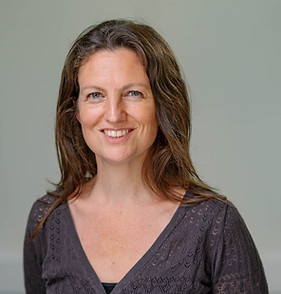
Professor Naomi Sykes
Naomi is the Lawrence Professor of Archaeology at the University of Exeter. Her research focusses on human-animal-landscape interactions and how they inform on the structure, ideology and environmental impact of societies, past and present. Her approach is to
integrate archaeological data with wider scientific evidence (especially DNA and stable isotope analysis) and discussions from anthropology, cultural geography, (art) history and linguistics. She has undertaken extensive research on wild/introduced animals, particularly within
the context of Roman Europe, and shown how these ancient findings can underpin modern conservation policy.
From Margary Grant and Fishbourne Roman Zoo to International Wildlife Policy
Professor Naomi Sykes
It started with a Margary Grant. In 2005 I was awarded £700 to radiocarbon date two animal bones from Fishbourne Roman Palace. Over the subsequent decades, through a number of different projects, we have used high-resolution bimolecular techniques to analyse the beautifully curated assemblage from Fishbourne. This work has revealed that exotic animals were brought from across the Roman Empire, and beyond, to establish breeding populations at the site. This is the first physical evidence for the presence of menagerie in the ancient world and helps us understand how humans have manipulated the natural world for millennia, with legacies that endure to the present.

Getting round Fishbourne: The problem of RR420 and Iron Age/Roman routes to the west of Chichester
Professor Tony King
Travelling west from Roman Chichester encounters a problem that this paper seeks to address. The Roman villa/palace at Fishbourne is in the way! How did travellers skirt around the villa estate, or were they by contrast subject to control as they passed by Fishbourne? The large basilical hall at the NE corner of the villa may have had a public function, and therefore be linked to the routeway west from Chichester. Other issues are the role of the Chichester entrenchments in the route west, both in the Late Iron Age and the Roman period; the purpose of the enigmatic structures north of Bosham; and the potential pilgrimage or processional route to Hayling Island during the LIA and Roman period. Lastly, we look at the Antonine Itinerary and its mileage conundrum relating to the road between Chichester and Winchester – where in fact was Regnum – was it Fishbourne?


Professor Tony King
Tony is Emeritus Professor of Roman Archaeology at the University of Winchester. After graduating with a BA from the Institute of Archaeology, London, in 1975, specialising in Roman archaeology, he went on to PhD research on Roman samian ware (terra sigillata), also at the Institute of Archaeology, completed in 1985. Meanwhile, he developed teaching at the universities of London, Winchester, Maryland (European Division) and elsewhere, and research interests in Romano-British religion, villa economies, Italy in the 1st millennium BC to the 1st millennium AD, and vertebrate zooarchaeology. Tony was Visiting Research Fellow at the Institute of Classical Studies, University of London, 2001-02, and is currently President of the Association for Roman Archaeology.

Mark Roberts, BA
Mark Roberts is a freelance/independent archaeologist. Born at Chichester, Mark developed interests in geology and archaeology at an early age and volunteered at a number of Sussex excavations before studying for a BA in Archaeology at the UCL Institute of Archaeology. It was whilst a student, supervising rescue excavations on a Romano-British site, that he became acquainted with the now famous Lower Palaeolithic remains at a much deeper level at the quarry. Mark is best known for his subsequent excavations at this internationally famous site. Mark went on to become a principal research fellow and lecturer at the Institute of Archaeology. He has twice been awarded the Stopes Medal for his contribution to the study of Palaeolithic humans and Pleistocene geology.
Other work by Mark includes various excavations on the Sussex Downs, including sites at Goosehill Camp on Bow Hill and at Downley, the location of Iron Age and Roman settlements and a Tudor hunting lodge.

Excavation at Boxgrove
The Margary Fund and the beginnings of the Boxgrove Project: an indispensable investment
Mark Roberts
The early years and development of the Boxgrove Project are not well-known, whilst recently constructed historiographies have attempted to diminish the achievements of Britain's most extensive multidisciplinary Palaeolithic excavation. In 1983 the Margary Fund made a small but significant grant that enabled the first formal excavation at the site and built upon the linked geological sections and first in situ handaxe, recorded in the Winter of 1982. The timing of the grant that enabled the investigation was critical, as construction infrastructure projects were about to boom in the mid eighties and the demand for gravel would become immense. The importance of what was discovered in 1983, allowed for further state funding that achieved critical momentum as more finds were made across the half a million year old preserved landsurfaces. In conjunction with the excavation and research there ran an intensive learning programme, which related to the workings of the sand and gravel quarrying industry. This knowledge along with a continued presence on site, under often gruelling conditions, contributed to saving of the critical landsurfaces on numerous occasions. Boxgrove and its revelatory discoveries sparked a renaissance in Palaeolithic and Quaternary research in the UK and brought archaeology firmly into the multidisciplinary tent: none of these achievements would have been possible without the prescience and philanthropy of Ivan Margary.
What has Ivan Margary ever done for me?
David Millum
David Millum’s talk will aim to bring the conference to suitable conclusion with a personal account of how the work of Ivan Margary influenced and guided over 20 years of archaeological investigations. Starting with an evaluation trench across the Greensand Way at Plumpton undertaken as part of his master’s degree, which led to his first published paper in SAC 149, aptly titled ‘What did Ivan Margary ever do for me’. Continuing with the much larger and intensive ongoing excavations with the Culver Archaeological Project at Bridge and Culver Farms at Barcombe. This year coincidently saw another paper by David published in SAC 162 on Con Ainsworth’s 1980’s excavations of the medieval pottery kilns at Streat. This featured Luke Barber’s analysis of the pottery made possible by a Margary Grant, which establishes Streat ware as an individual and definable Sussex product.
‘And all of that is what Ivan Margary did for me!’

The 2009 road dig at Culver Farm that Margary's SAC 74 paper of 1933 inspired

David Millum, BA, MA, MCIfA
David Millum is an independent research archaeologist with a Master’s degree in field archaeology from Sussex University, where he was an Associate Tutor just prior to the department’s closure in 2012. He was elected to the Chartered Institute for Archaeologists in 2011 and was the deputy director of the Culver Archaeological Project from 2011-2019, having previously supervised excavations for CAP from 2007 and for Sussex University at Barcombe bathhouse from 2010 to 2012. He regularly reports on the Bridge Farm results on the project’s website, www.culverproject.co.uk, as well as providing papers for the Sussex Archaeological Collections and contributed the medieval chapter for the Upper Ouse in the Archaeology of the Ouse Valley, Sussex to AD 1500 published in 2016.

A Margary Grant funded the analysis of the decorated body and handle sherds that defined Streat ware